Clipped from: https://www.financialexpress.com/money/aadhaar-isnt-proof-of-date-of-birth-uidai-clarifies-its-correct-usage-4219761/
The Unique Identification Authority of India has cleared up a common confusion: Your Aadhaar works as ID proof, but it doesn’t count as proof of your date of birth.
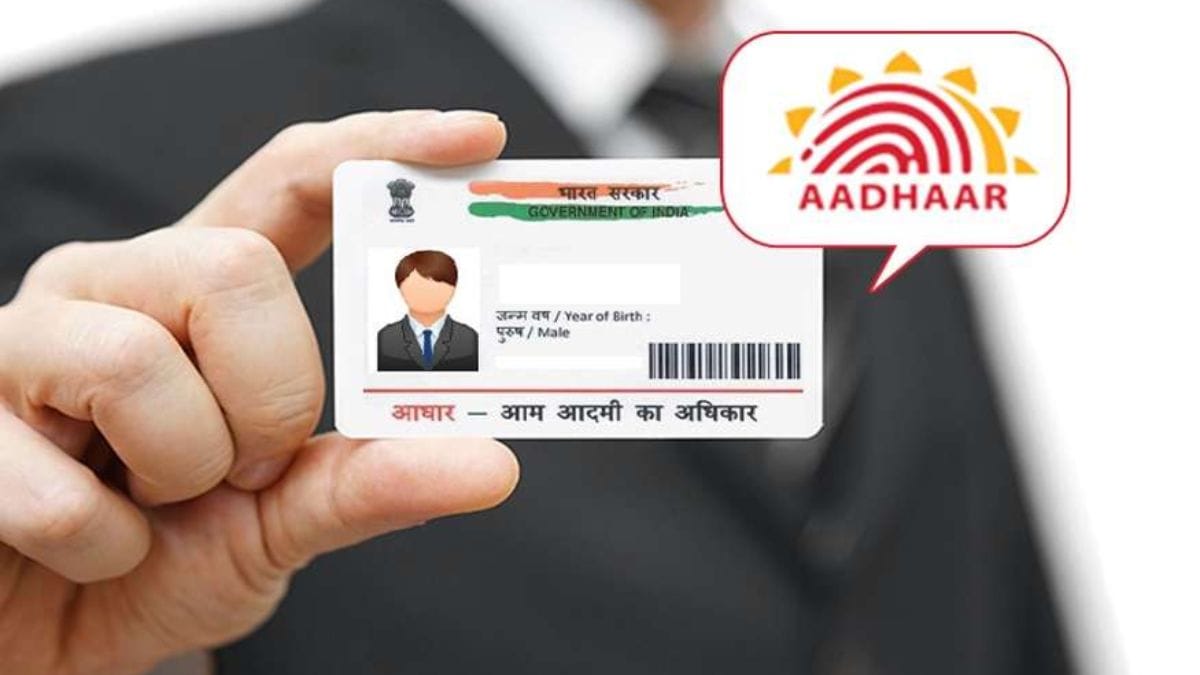 UIDAI says Aadhaar isn’t enough to prove your date of birth.
The Unique Identification Authority of India (UIDAI) has reiterated that Aadhaar card can be accepted as a proof of identity, but not as a valid proof of a person’s date of birth. The clarification by the Aadhaar-issuing body comes amid ongoing confusion over the document’s legal standing in official verification processes.
In a recent communication, the UIDAI reiterated that Aadhaar’s primary function is identity authentication and not age verification. The authority emphasised that the document should be used in conjunction with authentication systems for identification purposes only.
Aadhaar’s legal scope limited to identity
In a detailed clarification document, the UIDAI said, “Aadhaar is intended to serve as a proof of identity, when used with authentication. They further highlighted… Aadhaar may be accepted for establishing identity in the manner specified by regulations, the same is silent with regard to its acceptance as proof of date of birth…”
“…in the event of dispute regarding correctness of date of birth in Aadhaar, the burden of proof lies with the Aadhaar number holder… an Aadhaar number can be used for establishing identity of an individual subject to authentication; however, in itself, it is not a proof of date of birth,” the UIDAI stressed.
The clarification highlights that the Aadhaar Act, 2016 explicitly recognises Aadhaar as identity proof but does not extend this recognition to date of birth validation. As a result, individuals may need to provide additional documents when age verification is required.
What is Aadhaar?
Aadhaar number is a 12-digit random number issued by the UIDAI to the residents of India after satisfying the verification process laid down. Any individual, irrespective of age and gender, who is a resident of India, may voluntarily enroll to obtain Aadhaar number.
Person willing to enroll has to provide minimal demographic and biometric information during the enrolment process which is totally free of cost.
An individual needs to enroll for Aadhaar only once and after de-duplication only one Aadhaar shall be generated, as the uniqueness is achieved through the process of demographic and biometric de-duplication.
How is Aadhaar different from any other identity issued by the government?
Aadhaar number is assigned to individuals and it is verifiable online anywhere anytime using the Aadhaar authentication platform. This number, when authenticated successfully, serves as proof of identity and could be used for identification of beneficiaries for transfer of benefits, subsidies, services and other purposes.
Key objectives
Direct Benefit Transfer (DBT)
Aadhaar is used to transfer subsidies and benefits (e.g., LPG, PDS ration, scholarships, Mahatma Gandhi National Rural Employment Guarantee Scheme) directly to beneficiaries, preventing siphoning by middlemen.
Electronic Know Your Customer (eKYC): Aadhaar is also used for immediate paperless verification to open bank accounts, obtain new SIM cards, or receive various services without physical paperwork.
Unique identity verification: Aadhaar being a biometric-linked number, it prevents the existence of fake or duplicate identities in government systems.
Portability: Aadhaar acts as a universal identity for people, allowing citizens especially migrants to prove their identity anywhere in India.
Digital Empowerment: It simplifies the identification process for both the government and private entities, facilitating “ease of living” for people.

