Clipped from: https://www.financialexpress.com/opinion/relief-with-strings-attached/4135807/
The real test will be whether India can secure a final BTA that delivers stable market access
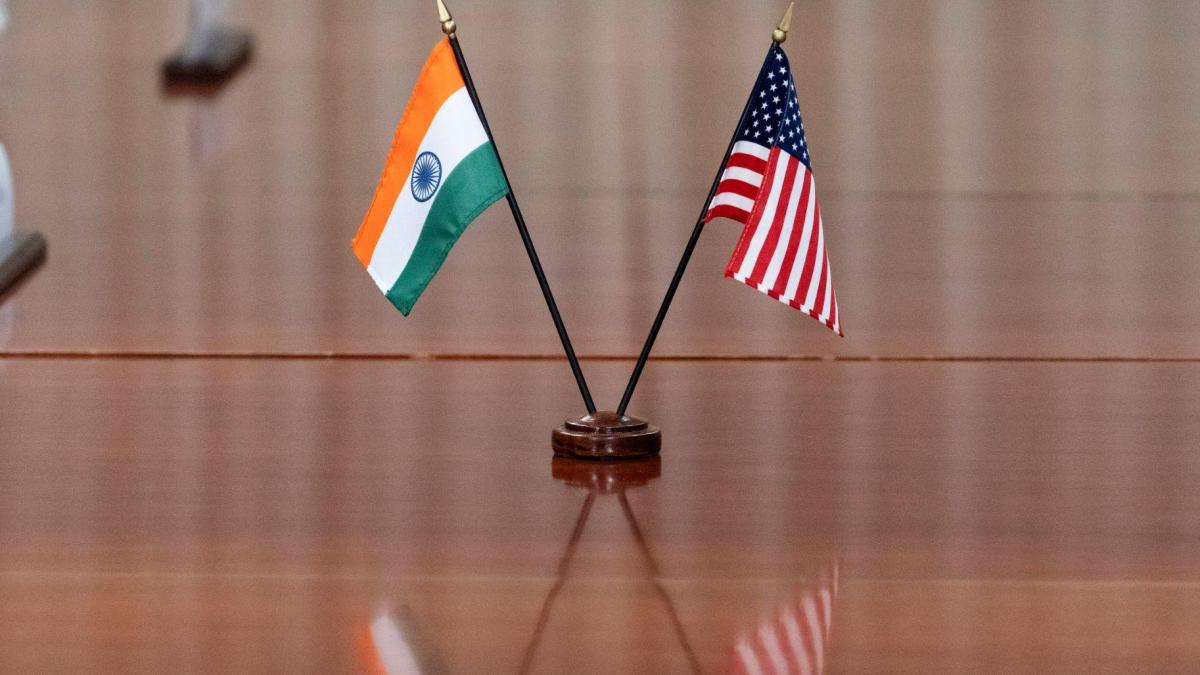 Decoding the Geopolitical Strings Attached to India’s $500 Billion US Pact
By Ajay Srivastava, Founder, Global Trade Research Initiative
By issuing a joint statement on February 6, India and the US announced the framework for an interim trade agreement—an important step towards an ambitious bilateral trade agreement (BTA). The details suggest a deal shaped less by mutual market access than by conditional relief from US trade pressure. Understanding its implications requires looking beyond headline tariff cuts.
US statements assert that India agreed to halt Russian oil purchases in exchange for a reduction in “reciprocal tariffs” from 50% to 18%. That understanding appears only in US communications—not in any language endorsed or signed by India. Instead, the US has issued a unilateral executive order stating it will monitor India’s oil purchases and re-impose higher tariffs if India is deemed non-compliant.
Tariff relief, in other words, is conditional on geopolitical behaviour that India has neither formally accepted nor publicly committed to.
The condition is economically significant. Russia was India’s largest crude oil supplier in fiscal 2025, accounting for roughly 35% of imports—about $50.3 billion. Replacing such volumes is neither quick nor costless, particularly when Russian oil exports of roughly seven million barrels per day are being pushed out of normal global trade flows.
The US is poorly positioned to fill this gap. Washington has secured oil-supply commitments from multiple partners: the European Union has pledged $750 billion over three years; Japan $7 billion annually in LNG; the United Kingdom a 10-year LNG contract starting in 2028; and countries such as Vietnam and Thailand have signed long-term deals extending to 2040. Yet despite high petroleum exports, the US continues to import more crude oil than it exports.
The constraint is structural. US shale production is dominated by light crude, while many refineries—both in the US and globally—require heavier grades. This forces the US to export light oil while importing heavier crude at the same time. With no spare refining capacity and crude-quality mismatches, the US cannot realistically replace Russian supplies at scale.
Forcing large buyers such as India to switch suppliers risks tightening global oil markets further, increasing price volatility and raising energy costs worldwide.
The asymmetry in US policy on Russian oil is also notable. Under Executive Order 14117 issued on February 6, India must stop buying Russian oil entirely—directly or indirectly from any Russian firm—or face renewed punitive tariffs. By contrast, US sanctions issued on October 22, 2025, targeted only Rosneft and Lukoil, which together account for about 57% of Russian crude production. Other countries may still import Russian oil so long as it does not come from those firms, not India.
China, the world’s largest buyer of Russian oil, faces no comparable trade or tariff action. The selective approach suggests that US pressure is driven more by geopolitical leverage than by uniform sanctions policy.
Over the longer term, India must diversify energy imports while also reviving domestic oil exploration. In 1985, India produced about 85% of the oil it consumed. Today, it imports nearly 85%, following decades of weak exploration and underinvestment. Reversing this imbalance requires opening new exploration blocks, improving contract terms, and accelerating technology adoption—alongside building sovereign energy and strategic infrastructure that are less vulnerable to external pressure.
Under the framework, India will reduce or eliminate its most-favoured nation (MFN) tariffs on all US industrial goods and on a wide range of food and agricultural products, though the full list of additional agricultural items remains unclear. The US, in return, will not reduce regular MFN tariffs on any product. Instead, it will only lower “reciprocal tariffs” that currently apply to about 55% of Indian exports, cutting them from 50% to 18%. The main beneficiaries will be Indian exporters of textiles and apparel, leather and footwear, plastics and rubber products, organic chemicals, home décor, and artisanal goods.
India has also indicated its intention to purchase $500 billion worth of US goods over the next five years, including energy products, aircraft and aircraft parts, precious metals, technology goods, and coking coal. Meeting that target would require India’s annual imports from the US to rise from roughly $45 billion to nearly $100 billion—an expansion that appears implausible given demand constraints, existing supply contracts, and fiscal limits. The figure reads more as an aspirational signal than a binding commercial commitment.
India has agreed to relax restrictions on US medical-device imports and to eliminate import licensing requirements for US information and communication technology products. India has further committed to address non-tariff barriers affecting American food and agricultural products. These concessions are one-sided: the US has made no parallel commitments on market access for agricultural imports from India, a pattern seen in other recent US trade arrangements.
Finally, the United States is seeking largely one-sided digital-trade commitments, pressing India to remove barriers to digital commerce and adopt binding digital-trade rules under the BTA.
The likely objective is to secure from India the same concessions obtained from Malaysia, including bans on digital-services taxes and similar levies. If accepted, such provisions would limit India’s ability to levy equalisation taxes or regulate its digital sector in the future.
Taken together, the interim agreement offers India limited tariff relief but embeds far-reaching conditions on energy sourcing, regulation, and digital policy. What is presented as a trade breakthrough is, in substance, a bargain in which relief from punitive US tariffs is exchanged for constraints on India’s future choices.
The real test will not be the announcement itself, but whether India can secure a final BTA that delivers stable market access without locking its energy, digital, and strategic policies into externally enforced commitments.
 aniltikotekar4sme.com