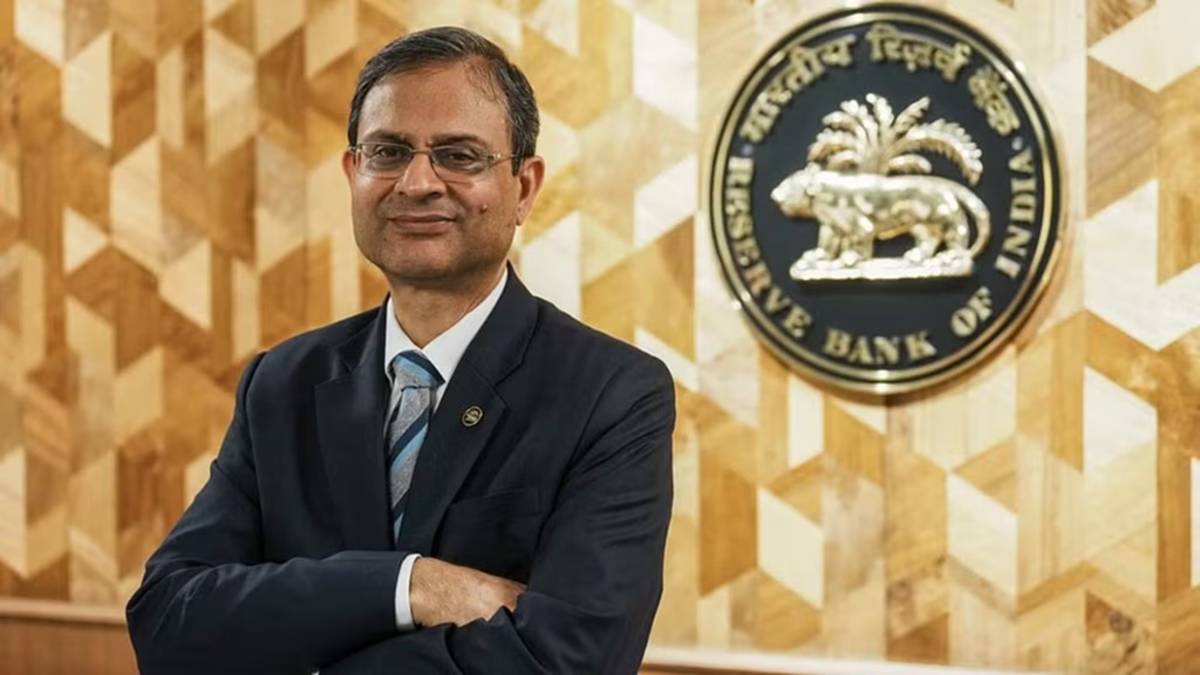
Post-MPC meeting, RBI Governor Sanjay Malhotra affirms India’s strong growth path, projecting a 20-basis-point GDP boost from the India-US trade deal.
 India Still in a ‘Better’ Goldilocks Spot; No Immediate Need for Rate Cuts or Liquidity Shifts
Reserve Bank of India Governor Sanajay Malhotra, along with the members of the monetary policy committee, spoke to the media after the policy decisions. Excerpts:
With money market rates below the repo rate, how will the RBI manage the large borrowing programme, and should markets expect OMOs or other liquidity tools?
Malhotra: Our priority is to ensure the system has adequate liquidity, and maintain smooth transmission across markets. All our operations — OMOs, VRRs, VRRRs, long- or short-term — are aimed at keeping the overnight rate aligned with the policy repo rate. While we don’t pre-announce actions, we will continue to provide liquidity proactively and pre-emptively to ensure orderly markets and effective transmission.
Markets remain concerned about the medium-term borrowing outlook. Even with abundant liquidity today, will switches and buybacks remain part of the tool kit? How should we interpret the large gross borrowing number?
Malhotra: The gross number looks large only because next year’s redemptions are high. What matters is net borrowing, which rises only marginally—from Rs 11.53 lakh crore to Rs 11.73 lakh crore—making the increase modest relative to Budget and GDP growth. Strong T-bill mobilisation, small savings inflows, and about Rs 2.5 lakh crore of planned switches will support liquidity and yield-curve management.
T Rabi Sankar: Buybacks aren’t factored in yet; we consider them during the year, and they reduce gross borrowing when undertaken… I’m confident of managing this programme efficiently.
Is there a plan to curb lazy banking, by capping SDF access or widening the corridor to push banks towards productive lending? And is a CD ratio of 80–81% the new normal?
Malhotra: We recently reviewed the liquidity management framework, and given the tight linkages between TREPS, call money and repo markets, we are not considering changes to the corridor or SDF access right now. Short term misalignments can occur, but the call rate remains our operating target. On the CD ratio, this is cyclical; what matters to us is liquidity, and banks’ LCR and NSFR positions are very comfortable.
Are we still in Goldilocks ‘sweet spot’, or has the situation changed?
Malhotra: We are very much in the same sweet spot — if anything, in a better one. Growth has strengthened further, and on inflation, the small movements of 10–20 basis points are largely due to base effects and food-price volatility. Core inflation, excluding precious metals, remains benign. So while headline inflation may inch up slightly, the underlying dynamics are stable, and growth is looking even better than before. A number of recent developments have also improved the overall macro environment, placing us in a stronger position than when we last met.
Transmission on lending seems stronger than on deposits, where mid-tenure rates remain high. At the same time, gold loans have surged sharply due to price volatility. How do you view both issues?
Malhotra: On deposits, transmission is naturally slower because lending rates are benchmark linked, but it has been improving and will continue to do so. On gold loans, asset quality remains strong, slippages are low, and LTVs are well below regulatory limits, so we see no cause for concern.
Why did you choose this moment to ease norms for MSMEs and allow lending to REITs?
Swaminathan J: As for MSMEs, the Rs 10-lakh limit had not been revised since 2010, so raising it to Rs 20 lakh is simply an inflation-indexing move to support a vital employment generating sector. Similarly, extending lending eligibility to REITs aligns with what we already allow for InvITs and will further support the real estate ecosystem.
With commodity prices potentially rising and the rupee facing pressure, could inflation surprise on the upside, and does the current pause imply we are at the terminal rate of 5.25%?
Malhotra: On monetary policy, we remain data dependent. The MPC is in a neutral phase, and given the current macro outlook, we expect rates to remain at these levels for some time. Underlying inflation is very benign, and we continue to be in a Goldilocks-type position.
With UPI subsidies reduced in the Budget, is there room for MDR on high-value P2M transactions?
Malhotra: On UPI, I had only stated the obvious — that someone must bear the cost. The matter lies with the government, and I am confident we will find a sustainable model. There should be no concern for users or merchants.
What is your comfort level on system liquidity—would you be fine with liquidity at 0.6–1% of NDTL?
Malhotra: Liquidity isn’t about a fixed number; we assess it dynamically and ensure the system has what it needs for orderly functioning.
With trade deals progressing, do you foresee a reduction in monetary policy support?
Malhotra: Real rates are still elevated, and with inflation expected in the 3–4% range, we are broadly in the neutral zone.
How much could tariff reductions under upcoming trade deals add to GDP growth?
Malhotra: It’s still early to quantify the GDP impact because we don’t yet have the full details of the trade deal, but we have already built in about 20 basis points from various factors, including the US deal.
There are concerns that tech stocks and heavy AI-related investments are pushing markets up. Is there now a disconnect between markets and the real economy, and how do you assess the surge of money flowing into technology?
Poonam Gupta: The remarks were in the context of global markets. We are seeing two parallel narratives: On one hand, technology-led equity markets appear overheated; on the other, the real economy has held up surprisingly well. Much of this is linked to expected — and already visible — productivity gains from technology, including AI, which are supporting real sector growth. At the same time, global institutions like the IMF and BIS have flagged risks of overheating, so the corrections we are seeing are not unexpected.
How do you assess AI’s broader impact on the economy, especially given India’s dependence on IT led employment and remittances?
Poonam Gupta: We recently reviewed the global and domestic research on AI’s impact. The range of estimates is wide, but importantly, the evidence so far is not negative. Productivity gains are clearly visible, and surveys—both international and Indian—show a net positive effect on employment. As with any major technology shift, there will be churn: Some roles decline, others expand. The real challenge is managing the transition of skills and labour towards faster-growing segments. But at this stage, the overall impact appears positive.
How large is the Depositor Education Fund, and can it support the proposed Rs 25,000 small fraud compensation framework?
The Depositor Education and Awareness (DEA) Fund currently stands at over Rs 85,000 crore, including accrued income. We are still finalising the framework, so we haven’t made precise payout estimates. Our intention is to cover small-value frauds, which account for more than two thirds of cases but less than 15% of total value. The financial impact is therefore limited, while the relief to affected customers is significant. The fund is more than adequate for this purpose.
 aniltikotekar4sme.com