Clipped from: https://www.financialexpress.com/opinion/a-breakthrough-moment/4130299/
India and the US seal a major trade breakthrough, cutting tariffs on Indian exports and boosting competitiveness. While exporters gain a clear edge, questions remain over commitments, market access, and long-term trade policy stability.
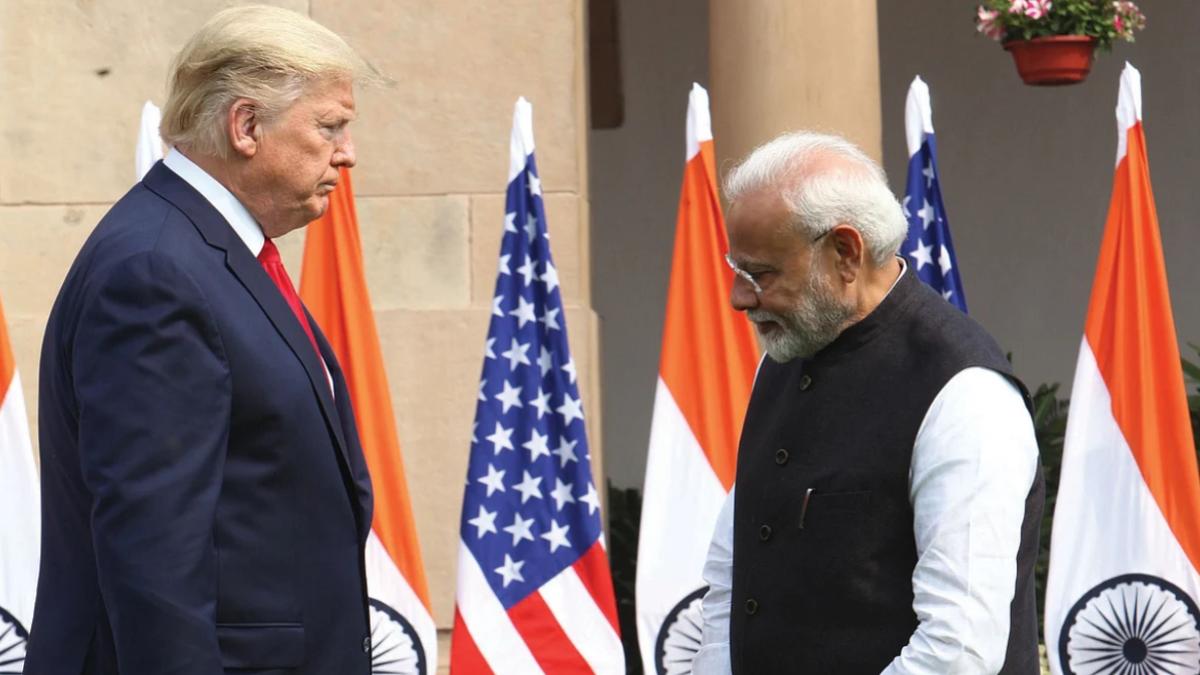 The trade deal with the US lifts the shadow over India’s exports, even as the fine print demands caution.
It’s a deal. The breakthrough in India-US trade talks—which has yielded a reciprocal 18% tariff on Indian exports to the US and scrapped the punitive 25% levy linked to purchases of Russian oil—is significant.
The new tariff is sharply lower than the 50% rate that had been in force since August last year, marginally below duties faced by exporters from Vietnam, Bangladesh, and Indonesia, and well under the 37% imposed on Chinese goods. Analysts estimate the effective tariff will now be about 14.6%, down from 33.6% earlier.
What’s in the deal for India?
For India, whose largest trading partner absorbs nearly a fifth of its exports, the gain is substantial. Exports to the US were valued at $85.5 billion in FY25. The deal gives Indian exporters a clear edge over many competitors.
President Donald Trump has said India has committed to buy $500 billion worth of US goods and more—a claim that still needs clarification. Even so, India is likely to increase purchases of products already under discussion, including oil, defence equipment, data-centre hardware, technology, and aircraft.
That need not translate into a ballooning trade deficit. In the near term, higher exports to the US should ease pressure on India’s merchandise trade deficit and the rupee, while adding an estimated 20-30 basis points to growth.
India’s trade negotiators deserve credit for their patience and perseverance. Navigating talks with a US administration known for its hard bargaining and shifting demands could not have been easy.
Backdrop of the announcement
It is also possible that Washington softened its stance in the wake of the recently concluded India-European Union trade deal, which opened India’s market to European products such as automobiles. While the US may be the more powerful partner, it is equally keen to secure access to India’s vast consumer market.
Still, even as the agreement is welcomed, complacency would be misplaced. The unpredictability of US trade policy—evident in the frequently changing terms of its deals with other countries—offers a cautionary lesson.
India must continue to pursue free trade agreements that serve its interests, while exporters should persist with efforts to diversify markets, as they have done since August last year.
Several questions remain unresolved. Chief among them is the precise quid pro quo: what, exactly, is India offering in return for lower tariffs? One possibility is a further reduction in purchases of Russian crude, a long-standing demand of President Trump.
Petroleum Minister Hardeep Puri said last week that Russian oil imports are expected to decline further, with refiners keen to raise supplies from Canada and the US. That suggests the government is open to diversifying energy sourcing after weighing the implications for ties with Russia.
While not all US imports into India will attract zero duties—despite Trump’s assertions—the exemptions are likely to be limited to a short negative list.
It is improbable that India will fully open its farm sector to US products—Commerce Minister Piyush Goyal said on Tuesday that India’s dairy and agri sectors will be protected at any cost. However, New Delhi could move towards closer alignment with international sanitary and phytosanitary standards to facilitate selective agri imports.
Technical and regulatory barriers may also be eased in certain areas, including a possible reworking of quality control orders. Long-standing demands by US e-commerce firms, such as allowing platforms like Amazon to hold inventory, could also find traction. After a turbulent 2025, the outlook for 2026 appears distinctly brighter.
 aniltikotekar4sme.com