For women workers, the threshold is even more disconnected from reality, according to Seema Singh, president of the Gig & Platform Service Workers Union. “For most women gig workers, including single mothers and divorced women, time is scarce, and prioritizing long working hours over family is a luxury.”
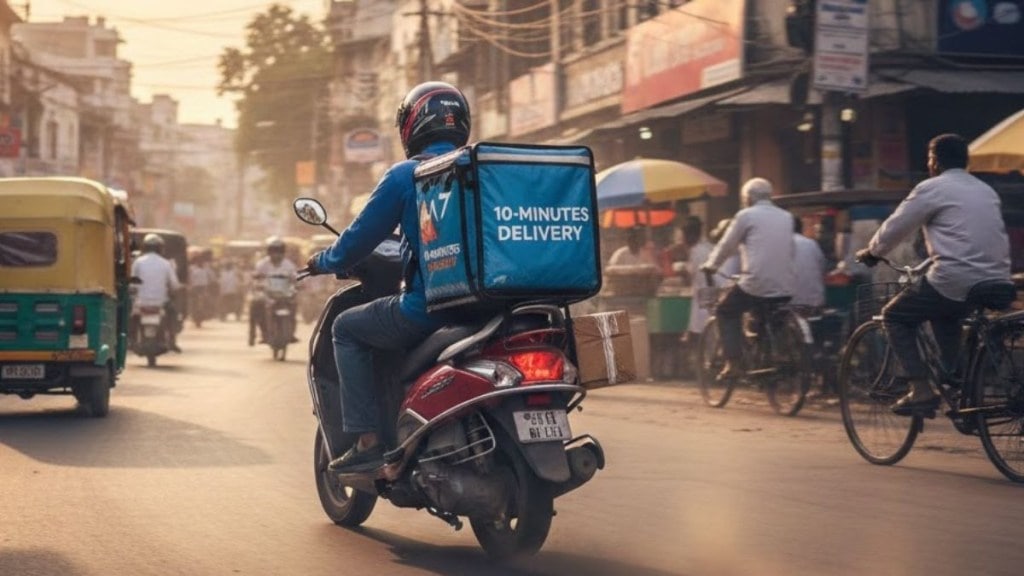 Mohammad Inayat Ali, national vice president of the Indian Federation of App-Based Transport Workers, said the disconnect reflects a misunderstanding of the gig economy’s structure.
The draft rules on the Social Security Code, 2020, published on December 30, 2025, if adopted in its current form risk rendering most gig workers ineligible for social security benefits by setting participation thresholds far higher than actual work patterns in the sector, labour unions and worker groups have warned.
The draft rules require gig workers engaged with a single aggregator to work a minimum of 90 days in a financial year, or 120 days if working across multiple platforms, to qualify for social security benefits including health, life, and personal accident insurance. The rules do allow double-counting when workers are active on multiple platforms simultaneously. For instance, someone working on Zomato and Swiggy on the same day would accrue two days toward the threshold. But union leaders say even this flexibility won’t help most workers qualify.
Worker groups cite Deepinder’s post as evidence
Worker groups have cited data shared by Eternal CEO Deepinder Goyal on Friday through a post on X, as evidence that majority would miss this threshold. Goyal’s post had claimed that the average delivery partner on its platforms worked just 38 days and 7 hour per working day in 2025, with only 2.3% working more than 250 days annually. Unions argue that even by accounting for workers juggling multiple platforms simultaneously, most would struggle to meet the 120-day threshold.
“By the platforms’ own admission, a 90-120 day eligibility threshold makes these Draft Rules dead on arrival,” said Shaik Salauddin, founder president of the Telangana Gig and Platform Workers Union, adding that “the rules exclude the overwhelming majority of gig and platform workers and cover only a small, privileged minority.”
The lack of clarity on implementation details compound the problem, according to Salauddin. The rules don’t specify how platform contributions will be calculated when workers move between multiple aggregators in short, irregular stints. It’s also unclear how the counting will work in practice or what protections workers receive at different day-count thresholds. The rules also don’t address overlap with the Motor Vehicles Aggregators Guidelines, 2020, which already require health and term insurance for drivers, he added.
What did Mohammad Inayat Ali say?
Mohammad Inayat Ali, national vice president of the Indian Federation of App-Based Transport Workers, said the disconnect reflects a misunderstanding of the gig economy’s structure. Vehicle owners, who drive their own car or bike, can sustain 150-200 working days yearly, but they’re a minority. “Nearly 70% of gig workers are not asset owners,” Ali said. These workers are typically migrants who travel to cities for short-term opportunities, “which limits them to working around 40-60 days” annually, working “less than three months a year across multiple platforms.”
The pattern is clearest during festival seasons when platforms create “temporary jobs that last a week to ten days” during Diwali, Dussehra, Eid and other peaks, drawing workers from Manesar, Sonipat, Meerut, Rohtak and surrounding villages to Delhi NCR, Gurgaon and Noida, Ali added. If the rules push workers to extend city stays to meet the 120-day threshold, they’ll face sharply higher rents and travel costs, Ali warned.
For women workers, the threshold is even more disconnected from reality, according to Seema Singh, president of the Gig & Platform Service Workers Union. “For most women gig workers, including single mothers and divorced women, time is scarce, and prioritizing long working hours over family is a luxury.”
Women are concentrated in home-based platform work like beauty services, cleaning, data entry, which are roles offering less consistent work than outdoor delivery jobs dominated by men, Singh argues. Current platform insurance often proves inadequate, Singh added. “Urban Company promises up to Rs 6 lakh for deaths and Rs 10,000 for accidents, but these are either delayed or too little to meet costs,” she added.
The draft rules also ignore fundamental issues like “safety, childcare, wage parity, mental health, access to washrooms for women gig workers. The challenges of women, trans, and queer workers—anyone who doesn’t fit into the normative worker category—tend to be left out,” Singh added. The platform economy’s structure makes organising difficult, particularly for women. “In families where both the husband and wife are involved in platform work, the man’s participation is seen as enough,” she added.
The unions are demanding social security that is universal, portable, and pro-rata, beginning from the first day of work, with clear, enforceable contribution norms across platforms.
A 2022 Niti Aayog report estimated 7.7 million gig and platform workers in 2020-21, projected to reach 23.5 million by 2029-30. The Ministry of Labour and Employment has invited feedback for 45 days before finalising the rules.
 aniltikotekar4sme.com