Clipped from: https://www.financialexpress.com/opinion/chinas-trade-challenge/4087544/
Beijing’s WTO move less about tariffs, more about India’s rise as a manufacturing competitor
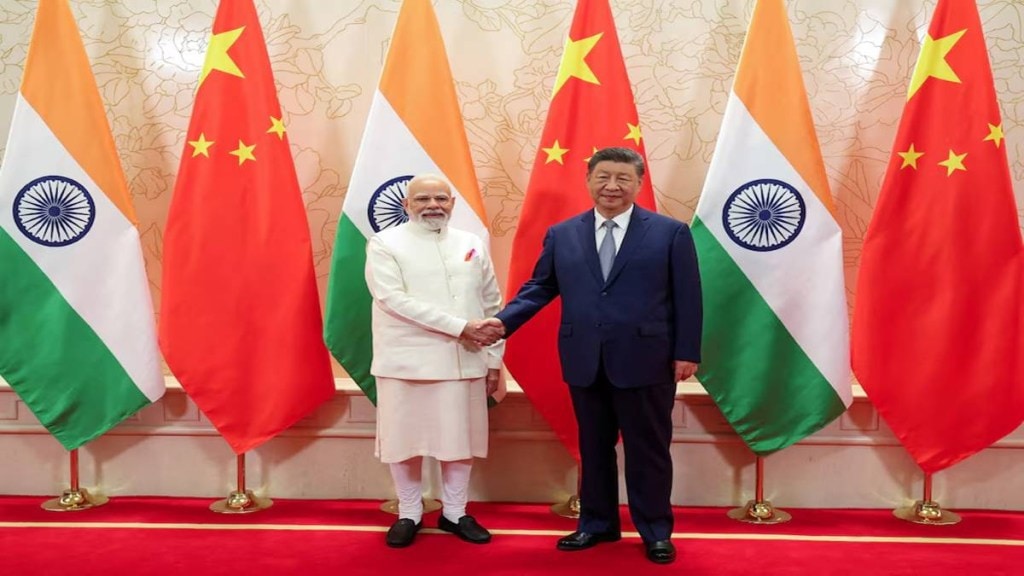 Why China is Dragging India to WTO Over PLI and Tech Tariffs
China’s recent decision to take India to the World Trade Organisation (WTO) over its industrial policy marks a subtle but significant shift in the political economy of global manufacturing. For the first time, Beijing’s actions suggest it sees India not merely as a vast consumption market, but also as a potential structural competitor in global production—particularly in electronics. Over the past few months, China has filed multiple disputes at the WTO challenging India’s production-linked incentive (PLI) schemes and tariff regime.
One case, initiated in October, targets incentives for electric vehicles, advanced chemistry cells, and auto components. Another, filed this month, questions India’s tariffs on information and communication technology products and subsidies for solar photovoltaic manufacturing. Beijing has also revived a long-pending appeal against India’s mobile phone import duties first imposed in 2018. Formally, the complaints hinge on alleged violations of tariff bindings and prohibitions on import-substitution subsidies. But the concentration on specific sectors—and the timing—point to a broader strategic intent.
Electronics Pivot
China is not a habitual litigant at the WTO. Despite persistent criticism of its own use of subsidies, preferential access to land and energy, and export-linked support, Beijing has generally avoided formal disputes that might invite reciprocal scrutiny. Its choice to move now signals that it perceives a material competitive risk emerging from India’s industrial policy push. Electronics manufacturing lies at the heart of this response. For nearly three decades, China has dominated global electronics production with few credible challengers.
India’s PLI-backed expansion is the first serious attempt to contest that position at scale. The numbers explain why this has caught Beijing’s attention. Smartphone production has risen from roughly $3 billion in FY15 to an estimated $71 billion by FY26. Mobile phone exports have jumped from about $2 billion in FY16 to nearly $28 billion. A decade ago, India imported close to 80% of its mobile phones from China; today, it meets almost all domestic demand through local manufacturing. A central driver of this transformation has been Apple.
Nearly one-third of global iPhone production has shifted to India.
Strategic Timing
Over the past year, China has sought to slow this momentum through indirect means rather than overt trade action. Chinese engineers were withdrawn from Indian contract manufacturing facilities, including those operated by Foxconn. Exports of critical capital equipment were restricted, affecting electronics, solar and other manufacturing segments. Controls were also imposed on rare earth supplies. The timing is telling. These measures coincide with the approaching sunset of the flagship smartphone PLI scheme in March 2026. They also align with China’s broader commercial strategy.
Chinese smartphone brands dominate India’s domestic market but export virtually nothing from India. The revived appeal on import duties appears aimed at ensuring that whatever limited supply-chain localisation exists through these firms is pulled back to China, even as they retain access to Indian consumers.
The broader implication is clear: China now views India as a manufacturing competitor in sectors that matter to global trade flows. The appropriate response is not to dilute ambition or retreat under pressure, but to consolidate gains—by extending effective incentive frameworks, improving execution and using the WTO process to manage external friction. The PLI architecture needs to be extended and deepened to preserve momentum and convert external pressure into durable competitive advantage. From that prism, Beijing’s litigation is less about legal minutiae and more about signalling.
 aniltikotekar4sme.com