SynopsisThe Reserve Bank of India Governor on Thursday announced that a majority of the Monetary Policy Committee deemed it fit that the central bank continues with its accommodative approach while leaving all rates unchanged in a bid to support economic recovery.In continuing with its loose monetary policy, the RBI risks staying behind the curve.
In his speech on Thursday, RBI governor Shaktikanta Das said the monetary policy committee unanimously deemed it fit that the central bank stuck to its accommodative approach while leaving all rates unchanged to back India’s recovery.
The RBI did defy market expectations in doing so. At a minimum, the bond market and analysts had factored in a hike in the reverse repo rate. But nothing of that sort happened. The MPC unanimously decided to keep the repo rate unchanged at 4% for the 10th consecutive time and decided to continue with the accommodative stance with a 5-1 majority to ‘revive growth on a durable basis with a check on inflation’.
The reverse repo rate has remained unchanged at 3.35% while the MSF and the Bank Rate remain at 4.25%. Das then went on to project retail inflation at 4.5% for the upcoming fiscal. The RBI has been mandated to maintain inflation between 2-6%.
What are central banks doing worldwide?
Some of the most prominent central banks across the world have, in the last few months, quickly adopted a more hawkish stance in the face of record-high inflation. The US Federal Reserve and the European Central Bank are expected to announce rate hikes this year. The Bank of England has already announced back-to-back rate hikes, something it hadn’t done since 2004 and experts already predict another hike following this.
When it comes to asset purchase programmes, the Fed has provided guidance that it expects to end its asset purchases by March 2022. The ECB on the other hand has indicated that it plans on continuing versions of its asset purchase programs through 2022 and into 2023.
Typically, the emerging economies have taken cues from prominent central banks like the US Fed when it comes to policy decisions.
But this time around, the likes of Brazil & Russia have already announced rate hikes.
ET Online
The change in rationale abroad
While money was pumped in at the beginning of the pandemic and interests were held at record low rates to support the sudden breakdown in the economy, managing the spiraling inflation has emerged has the priority, now that there is some semblance of normalcy in their respective economies.
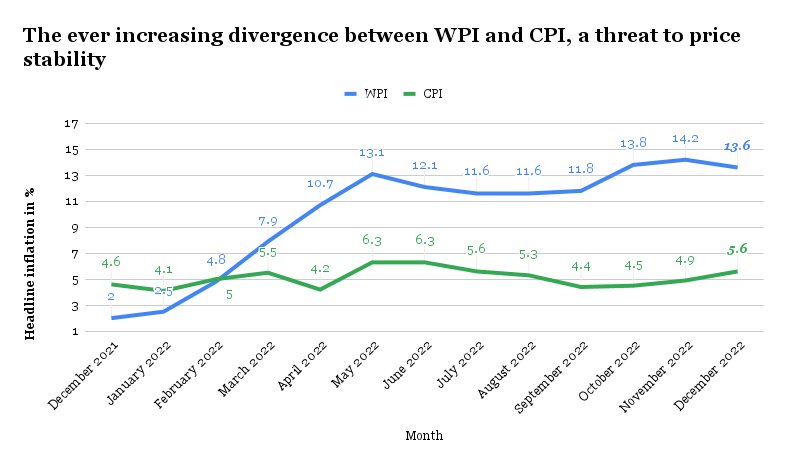
One corner of the market has even gone on to argue that, at this point, merely hiking the rates might not reduce inflation which has now risen to decadal highs owing to other reasons like supply chain issues & supply-demand mismatch, rather than just the gush of liquidity.
There is some merit to the argument that the US Fed and the ECB themselves have remained behind the curve when it comes to arresting the dwindling inflation. Data on Thursday revealed that inflation in the USA surged 7.5% on an annual basis, exceeding expectations and the highest since 1982.
Perhaps the Fed held its ‘transitionary inflation’ stance a bit longer than desired.
The persistent rationale in India
Back home, Governor Das has chosen to maintain the ultra-loose monetary policy for a bit longer. Data points suggest that there are some parts of the Indian economy that are still lagging behind, especially the contact-intensive sectors.
Domestic recovery is inching closer to pre-pandemic levels while private consumption is still lagging.
The supply-side measures that the government took up during the COVID-19 pandemic helped contain inflationary pressures but the elevated crude prices are a risk.
Defying street expectations, Das & co doubled down on their intent in waiting for broad-based growth and not seeing the need for urgent policy normalisation.
In doing so, is the RBI behind the curve? Dr. Aurodeep Nandi, India Economist, Nomura believes that has to do with RBI’s stance on inflation.
“Whether the RBI is behind the curve or not hinges rather crucially on the conviction that one attaches to the RBI’s FY23 inflation forecast of 4.5% YoY. If that seems reasonable, then there is merit in the RBI’s continued dovish guidance, although we argue that even if the RBI’s inflation forecast is correct, the economic outlook calls for normalising policy rates (from 4% currently),” Nandi says.
One key macro risk is the RBI underestimating the extent of inflationary pressures in the coming year, as it has done in the recent past when we look at one-year ahead forecasts. “Given the upside risks from higher commodity prices, services sector reopening, continued pressure on firms’ margins and elevated inflation expectations, it isn’t a far-fetched scenario,” Nandi adds.
In addition to a loose monetary policy, India now also has a loose fiscal policy. “This was a good strategy during the depths of the pandemic, but one whose relevance is increasingly debatable. The combination of loose fiscal and monetary policies could lead to a worsening of the macro imbalances via higher inflation and a widening current account deficit, which can result in a weaker rupee, compounding the inflation problem,” he says.
In the past, the RBI has admitted that its inflation projection model could go wrong and that there is scope for improvement & revised it. The adjustments incorporate fiscal-monetary dynamics, India’s unique and often chaotic fuel pricing regime, and exchange-rate fluctuations and their impact on the balance of payments, the Reserve Bank of India said in its latest bi-annual monetary policy report.
“With RBI MPC sticking to its dovish stance, risks are mounting for assessment that policy is falling behind the curve,” Citigroup economists including Samiran Chakraborty wrote in a note. “While the short tenor rates will likely struggle to recover from overwhelming RBI dovishness, long tenor rates are likely to price in fear of larger quantum of cumulative hikes, the longer is the delay to get on with it.”
Research firm Nomura still forecasts a 100 bps policy repo rate hike in 2022. They further expect the RBI’s policy stance to change from ‘accommodative’ to ‘neutral’ in April, with 25 bps worth of repo rate hikes at each of the next four policy meetings in 2022.
(Originally published on Feb 11, 2022, 02:00 PM IST)
Share the joy of reading! Gift this story to your friends & peers with a personalized message. Gift Now
 aniltikotekar4sme.com