India’s government clarified Meta platforms must follow Indian laws and not just global policies. Officials stressed the need for greater local input and language understanding for content moderation. Zero tolerance for child sexual abuse material requires stronger, proactive measures from Meta. Concerns were raised about deepfakes and the repeated reappearance of removed content.
New Delhi: Meta’s platforms must be governed by Indian law, not merely by the company’s global policies, government sources clarified on Sunday and noted that it would be factually inaccurate to say that the government had “directed Meta to completely overhaul its algorithm.”While certain concerns remain, officials said the core intent of recent engagements with Meta is to ensure the platform’s guidelines and content policies are fully aligned with Indian law.
Sources further pointed out that India’s cultural context is often not fully understood by teams based outside the country, and that Meta needs greater local input including a stronger grasp of Indian languages and cultural nuance to moderate content effectively.
Also Read: India asks Meta to revamp algorithms, submit roadmap to fight deepfakes
On the issue of Child Sexual Abuse Material (CSAM), government sources were unequivocal, stating there is zero tolerance and zero compromise on such content. Allowing such material to remain on the platform amounts to a serious violation of rules, they said, adding that Meta must adopt stronger, more proactive measures, with concrete action expected rather than assurances alone.
Referring to deepfakes involving prominent personalities, sources said content posted from authorised or verified handles should not be misidentified as deepfakes. They noted that such sensitive cases cannot be left entirely to automated detection systems, and called for a “human-in-the-loop” mechanism to ensure proper review before any takedown action.
On synthetically generated content, officials raised concerns over repeated reappearance of material already identified and removed as deepfakes. Meta has been asked to specify what concrete steps it is taking to prevent such content from resurfacing after removal.
The government also sought clarity on Meta’s recommendation and virality algorithms, questioning why users are frequently shown content unrelated to their stated interests. Sources said this points to underlying flaws in the recommendation system that need to be understood and addressed. Meta was specifically asked why synthetically generated content continues to be amplified by its algorithm, with officials insisting that once such content is flagged, it should neither be recommended further nor allowed to resurface repeatedly.
The clarifications came after a meeting on Friday between Meta’s technical team and officials from the Ministry of Electronics and Information Technology (MeitY), during which the company’s representatives walked through existing systems for handling harmful content online. Technical discussions between the two sides are ongoing, with both parties agreeing to continue talks. Another round of meetings is expected in the coming week.
View 4 Comments on this Story
NEXT STORY
SECTIONS
ANILast Updated: Aug 09, 2026, 03:28:00 PM IST
Jawaharlal Nehru University cancelled an auditorium booking for a book discussion. The administration cited non-disclosure of full programme facts as the reason. The JNU Students Union condemned the arbitrary and authoritarian decision. They stated discussing books is fundamental to academic and democratic engagement. The discussion will now proceed outdoors to defend academic freedom.
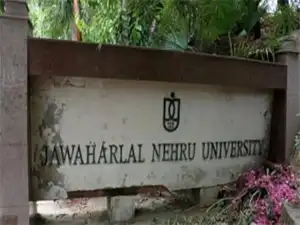
New Delhi: The Jawaharlal Nehru University (JNU) has cancelled the booking of its auditorium for a discussion on former student Umar Khalid’s book Fractured Communities: Adivasi Histories and the Politics of Power, citing “non-disclosure of the full facts about the programme”.The event was scheduled to be held on August 10 from 3 pm to 6 pm at the School of Social Sciences (SSS-I) auditorium.
The programme was organised as a discussion on the occasion of the International Day of the World’s Indigenous Peoples.
In a statement issued on X on Sunday, JNU said, “The booking of the auditorium SSS-1 stands cancelled because of non-disclosure of the full facts about the programme.”
Read More: India’s education spending share drops below UNESCO’s 15% standard

Live Events
The university added that JNU is a “democratic and decentralised institution” and that the permission had been granted by the Dean, SSS, who subsequently took action to cancel the event.
The event poster listed Professor Prabhu Mohapatra, Professor Uma Chakravarti, Shuddhabrata Sengupta, Harsh Mander and Banojyotsana Lahiri among the speakers.
The booking record had also mentioned Professor Avinash Kumar as the faculty representative. The auditorium booking was confirmed on August 7.
JNU, however, has not specified what particular details about the programme were allegedly not disclosed.
Khalid, a former JNU student, is the author of Fractured Communities, which examines Adivasi histories and the politics of power.
Read More: India sails past China with 27% more officers steering the world’s ships
The cancellation comes days after another event at JNU, an ISKCON programme, was cancelled following objections from the JNU Students’ Union over alleged violation of university rules governing the use of campus facilities by religious organisations.
Meanwhile, the Jawaharlal Nehru University Students’ Union (JNUSU) condemned the “arbitrary” and “authoritarian” decision of the JNU Administration to cancel the booking of the SSS-I Auditorium for a scheduled discussion on Umar Khalid’s book, Fractured Communities on the World Adivasi Day.
In a statement, the JNUSU reiterated that discussing a book is a fundamental part of academic culture and democratic engagement on any university campus. “By cancelling the venue for this event, the JNU Administration has once again exposed its anti-student and anti-intellectual agenda, one that seeks to suppress critical thought and silence dissenting voices rather than foster the free exchange of ideas that a university is meant to protect.”
“The administration’s stated reason, that “full details” were not disclosed at the time of booking, rings hollow. It was the Dean of the School of Social Sciences who himself instructed that the booking be made in that very format. This contradiction lays bare the administration’s true intent: to manufacture a pretext for censorship. We also cannot ignore the double standards at play. The same administration, under the current Vice Chancellor, extended full cooperation and space across campus for ISKCON events, while denying space for a legitimate academic discussion. This selective application of rules raises serious questions about whose interests the administration is truly serving, certainly not those of the student community or the principles of academic freedom,” the statement added.
The JNUSU emphasised that the book is a serious, long academic work on the struggle of Adivasi resistance and their struggles of Jal, Jungle and Jameen and cancelling the discussion on the same book exposes the “Admin anti-Adivasi ideology“.
“We further note that this crackdown comes even as serious questions of institutional integrity remain unanswered. A recent investigative report by journalist Alok Rajput, published by the Reporters’ Collective, has raised concerns regarding multiple faculty recruitments at the level of Associate Professor and Professor under the current Vice Chancellor’s tenure, alleging that several appointees did not meet the minimum qualifications on teaching experience and publications as specified in the original advertisements,” it said.
“JNUSU condemns in the strongest terms these tactics of intimidation and censorship by the JNU Administration. However, let it be clear: cancelling a room does not cancel a conversation. No administrative order can suppress the right of students to think, question, and discuss,” the student union asserted.
“We call upon the entire JNU community, students, faculty, and staff alike, to stand in solidarity and defend the academic and democratic character of our campus. The discussion on Fractured Communities will proceed as planned, outside the SSS-II building, in the open, where ideas cannot be locked away. Come in large numbers. Defend your right to know, to read, and to discuss,” it said.
Stories you might be interested in

