A Mumbai taxpayer who declared income of just Rs 6.3 lakh came under the tax scanner after paying credit card bills worth Rs 27.65 lakh, including Rs 13.95 lakh in cash. The Income Tax Appellate Tribunal (ITAT) examined whether cash gifts claimed from his father, mother and wife could explain the transactions and ultimately granted relief on a large portion of the addition.
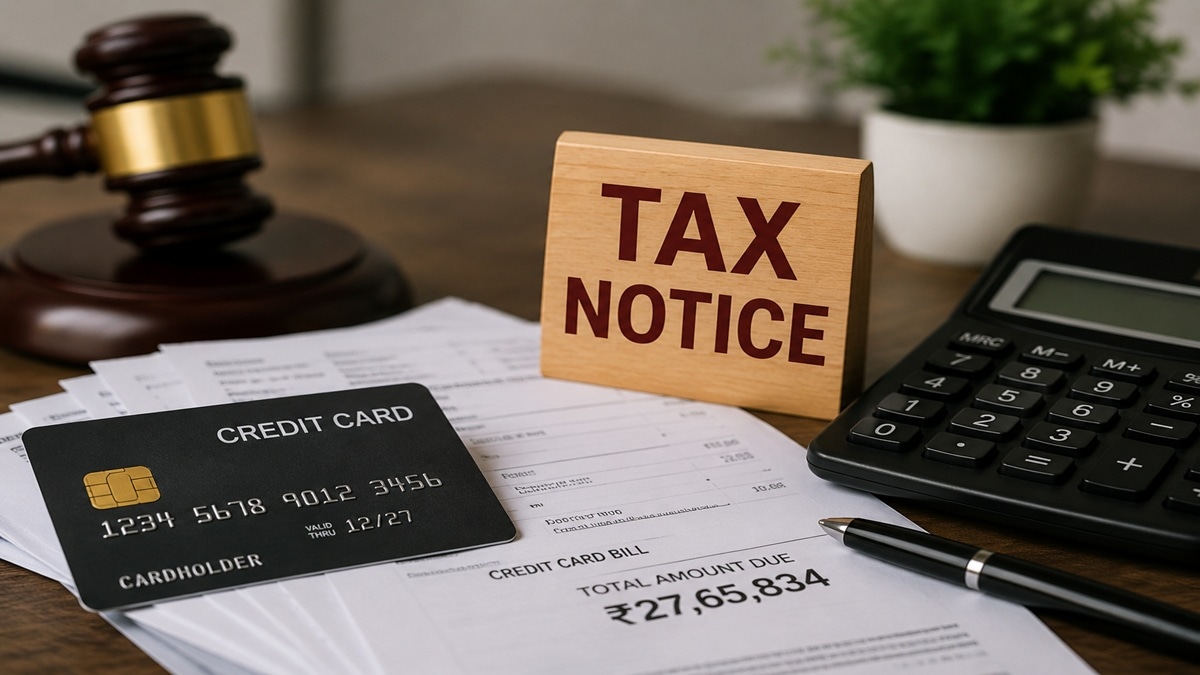 Man declares Rs 6.3 lakh income, pays Rs 27.65 lakh in credit card bills; gets tax notice – ITAT ruling says this (AI-generated image)
The tax department treated the cash payments as unexplained money and added the amount to his income under Section 69A of the Income Tax Act.
However, after examining income tax returns, bank statements and other evidence submitted by the taxpayer and his family members, the Income Tax Appellate Tribunal (ITAT) granted substantial relief and deleted a large part of the addition.
The case highlights a common tax risk: large cash transactions that do not appear to match the income reported in tax returns.
How the dispute started
According to the order of the Mumbai bench of the ITAT in the case of Shrenik Manish Mehta vs ITO, Ward 22(3)(6), Mumbai, the taxpayer filed his income tax return for Assessment Year 2023-24 declaring total income of Rs 6,30,820.
During scrutiny assessment, the Assessing Officer (AO) found that Mehta had made credit card payments totalling Rs 27,65,834. Out of this, Rs 13,95,020 had been paid in cash.
The case was selected for scrutiny because of the large cash payments made towards credit card dues. The AO questioned the source of the cash used for these payments.
Taxpayer’s explanation: Cash came from family members
In response, Mehta told the department that the cash had come from his close family members out of love and affection. He claimed that his father had given him Rs 8 lakh and mother had given Rs 4.5 lakh. His wife had also given him Rs 3 lakh, as per his claim. Together, the family members had allegedly provided Rs 15.5 lakh in cash.
To support his claim, Mehta submitted affidavits from all three family members.
His father was stated to be engaged in the agarbatti business after discontinuing an earlier transport business, his mother was earning through tuition classes and the sale of homemade food items, while his wife was carrying on consultancy-related work.
Why the tax department rejected the explanation
The Assessing Officer was not convinced.
The officer observed that affidavits alone could not establish the source of funds and that the taxpayer had failed to adequately demonstrate the earning capacity of the family members who allegedly provided the cash.
According to the department, there was insufficient evidence to establish that the donors had the financial ability to make gifts of such amounts.
As a result, the entire cash payment of Rs 13.95 lakh was treated as unexplained money under Section 69A and added to Mehta’s taxable income.
The first appellate authority, Commissioner of Income Tax (Appeals), also upheld the addition. The CIT(A) observed that the explanation regarding large cash gifts from family members was difficult to accept and held that sufficient evidence had not been produced to establish the claimed sources of income.
What happened before ITAT
The matter eventually reached the Mumbai bench of the ITAT before Judicial Member Pawan Singh.
Before the tribunal, the taxpayer furnished additional documents, including affidavits, confirmations, income tax returns, profit and loss accounts and bank statements of his father, mother and wife.
The tribunal closely examined these records to determine whether the family members had genuine sources of income and whether they were financially capable of making the gifts claimed by the taxpayer.
Wife’s gift accepted in full
The tribunal noted that Mehta’s wife, Meghna Mehta, had filed income tax returns and reported professional income under Section 44ADA. Her bank statements showed regular credits from various entities, including Novshakti Security Force and Armour Security. Considering the documentary evidence, the tribunal held that the source of the Rs 3 lakh gift given by the wife was reasonably explained.
Accordingly, the entire Rs 3 lakh was accepted and the corresponding addition was deleted.
Mother’s gift partly accepted
The tribunal then examined the claim relating to Mehta’s mother, Vidya Mehta, who had allegedly gifted Rs 4.5 lakh. Her bank account reflected regular UPI credits, indicating some ongoing economic activity. She had also stated that she earned income through the sale of homemade food items within her community. However, the tribunal observed that her declared income was relatively modest.
Taking a balanced view, ITAT accepted only 50% of the gift amount and granted relief of Rs 2.25 lakh, while sustaining the remaining amount.
Father’s gift partly accepted
A similar approach was adopted for the gift claimed from Mehta’s father, Manish Mehta. The tribunal noted that he maintained a separate bank account that showed regular debit and credit transactions. The account activity suggested that he was engaged in systematic business-related activities.
However, ITAT found that the evidence did not fully justify the entire Rs 8 lakh gift. As a result, only 50% of the amount was accepted and relief of Rs 4 lakh was granted.
Final outcome
After considering all the evidence, the tribunal deleted Rs 3 lakh relating to the wife’s gift, Rs 2.25 lakh relating to the mother’s gift and Rs 4 lakh relating to the father’s gift. This resulted in total relief of Rs 9.25 lakh. The remaining addition of Rs 4.70 lakh was sustained. Accordingly, the appeal was partly allowed.
What taxpayers can learn from this ruling
According to Dinkar Sharma, Company Secretary and Partner at Jotwani Associates, large cash deposits and cash payments towards credit card bills often attract scrutiny because they may not appear consistent with the income disclosed by a taxpayer.
“When you make cash deposits or pay large amounts in cash towards your credit card bills, it can raise questions because the transactions may not match the income reported in your return or your normal banking pattern,” Sharma says.
He points out that many taxpayers assume that money received from family members or household savings does not require documentation. However, tax authorities can question such transactions if the source cannot be properly explained.
According to Sharma, common mistakes include making large cash deposits without maintaining records, relying on cash received from family members without documentation, claiming gifts without supporting evidence and carrying out transactions that do not align with declared income.
Three tests that matter in gift cases
Sharma says that in cases involving gifts, cash deposits and unexplained credits, tax authorities generally examine three key factors. The first is the identity of the donor, which is usually established through PAN, Aadhaar, tax returns, bank statements or proof of relationship.
The second is the creditworthiness of the donor, often the most disputed aspect. Tax officers typically verify whether the donor had sufficient income, savings, bank balance and financial capacity to make the gift.
The third is the genuineness of the transaction. Authorities examine the banking trail, timing of deposits, gift confirmations, relationship between the parties and whether there is a logical explanation for the transfer.
“Family relationship alone does not automatically prove genuineness. The surrounding financial circumstances and documentary trail must support the claim. However, where taxpayers can demonstrate reasonable earning capacity, family savings history and a coherent financial trail, appellate authorities have often granted relief even if documentation is not perfect,” Sharma explains.
The ruling serves as a reminder that while genuine family gifts may be accepted by appellate authorities, taxpayers should maintain adequate documentary evidence to establish not only who gave the money, but also the financial capacity of the person making the gift and the genuineness of the transaction.
Disclaimer: Disclaimer: This article is based on an ITAT ruling in the case of an individual taxpayer and is intended for informational purposes only. Tax outcomes depend on the specific facts, evidence and circumstances of each case. An ITAT order may be challenged before higher judicial forums. Readers should consult a qualified tax professional before taking any decision based on this ruling.

