Clipped from: https://www.financialexpress.com/money/rs-10-lakh-rs-10-crore-or-unlimited-how-much-cash-can-you-legally-keep-at-home-4238774/
A viral social media post has revived the question many taxpayers ask: how much cash can you legally keep at home? While there is no legal cap on cash holdings in India, trouble starts if you cannot explain the source of that money. Here’s what income tax rules actually say.
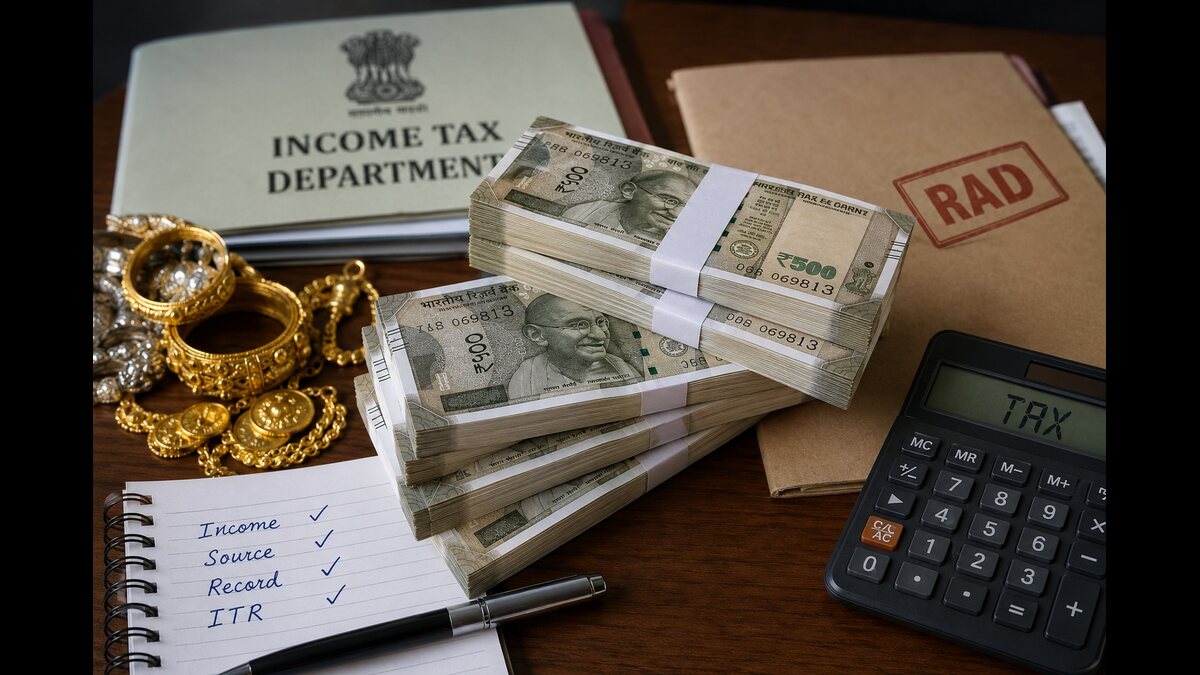 How much cash can you legally keep at home? Income tax rules every taxpayer should know (AI-generated image)
A viral social media thread by tax advisory platform TaxBuddy has reignited a common question among taxpayers: How much cash can you legally keep at home?
The short answer is – there is no legal limit on the amount of cash you can keep at home in India. Yes, whether it is Rs 1 lakh, Rs 10 lakh, or even more, the Income Tax Department does not prescribe any upper ceiling on holding cash at your residence.
But that does not mean all cash holdings are automatically safe from scrutiny. As TaxBuddy explained in its post on X, the real issue is not the amount of cash you possess, but whether you can explain where that money came from.
Why this question is being asked again
The discussion gained traction after recent Income Tax Department search operations in Tamil Nadu reportedly uncovered more than Rs 1,000 crore in alleged unaccounted income, along with cash, gold, silver, and property-related documents.
This often leads to confusion among ordinary taxpayers: If keeping cash at home is legal, why do tax raids happen?
The answer lies in the source of funds.
Cash at home is legal, but unexplained cash is a problem
Under income tax law, merely keeping cash at home is not an offence.
However, if the tax department asks about the source of that money and you are unable to provide a satisfactory explanation, it may be treated as unexplained income.
That can happen if the money is not disclosed in your Income Tax Return (ITR), it is not recorded in books of accounts, where applicable and there is no documentary evidence showing how the money was earned or received. In such cases, the amount may attract tax under Section 115BBE of the Income Tax Act.
How unexplained cash is taxed
If income is classified as unexplained under Sections 68 to 69D and taxed under Section 115BBE, the tax burden can become extremely steep.
The tax structure broadly works like this:
-60% tax on unexplained income
-25% surcharge on the tax amount
-4% health and education cess
This takes the effective tax rate to around 78%.
If penalty provisions apply after detection by tax authorities, the total burden can rise further, taking the outgo to roughly 84% in some cases.
This is why tax professionals often say unexplained cash can become one of the costliest tax mistakes.
Cash transaction rules you should know
While there is no restriction on storing cash at home, several income tax provisions regulate how cash can be used in transactions.
- Rs 2 lakh cash receipt limit (Section 269ST)
An individual cannot receive Rs 2 lakh or more in cash from a single person in a day, for a single transaction and for one event or occasion, according to income tax rules.
Violation can attract a penalty equal to the amount received.
- Business cash expense limit (Section 40A(3))
Businesses cannot claim deductions for cash expenses exceeding Rs 10,000 per person per day in most cases.
This means such payments may be disallowed for tax purposes.
- Cash loans and deposits (Sections 269SS and 269T)
Accepting or repaying loans, deposits, or certain advances of Rs 20,000 or more in cash is prohibited.
Penalty may be equal to the amount involved.
- High-value cash deposits are monitored
Banks are required to report certain high-value transactions.
These include cash deposits of Rs 10 lakh or more in savings accounts in a financial year and cash deposits or withdrawals exceeding Rs 50 lakh in current accounts.
Such transactions are tracked through the reporting framework.
- TDS on large cash withdrawals
Cash withdrawals above specified thresholds may attract TDS under applicable rules, mainly to discourage large cash dealings.
What about gold and jewellery?
Tax experts say even gold and jewellery kept at home are not automatically illegal.
But just like cash, if questioned, you should be able to explain ownership and source through purchase invoices, inheritance records, or other supporting documents.
The practical takeaway
The key takeaway for taxpayers is straightforward: keeping cash at home is not illegal, but keeping unaccounted cash can trigger serious tax consequences.
TaxBuddy summed it up neatly in its viral post: the problem is rarely the cash itself; it is the inability to prove that the money is legitimate and tax-compliant.
For salaried taxpayers and small business owners alike, maintaining documentation and ensuring proper disclosure in tax filings remains the safest approach.
Disclaimer:
This article is intended for informational purposes only and is based on publicly available provisions of the Income Tax Act, applicable tax rules, and social media commentary referenced in the story. Tax treatment may vary depending on individual circumstances, source of funds, nature of transactions, and interpretation by tax authorities. Readers should consult a qualified tax professional or financial adviser before making any tax-related decisions or acting on the basis of this information.

