A taxpayer’s cash deposit raised red flags after the tax department questioned its source and labelled it unexplained income. The matter reached the Income Tax Appellate Tribunal, which examined whether assumptions about personal financial behaviour can justify tax additions. Here’s what the tribunal said and why it matters for you.
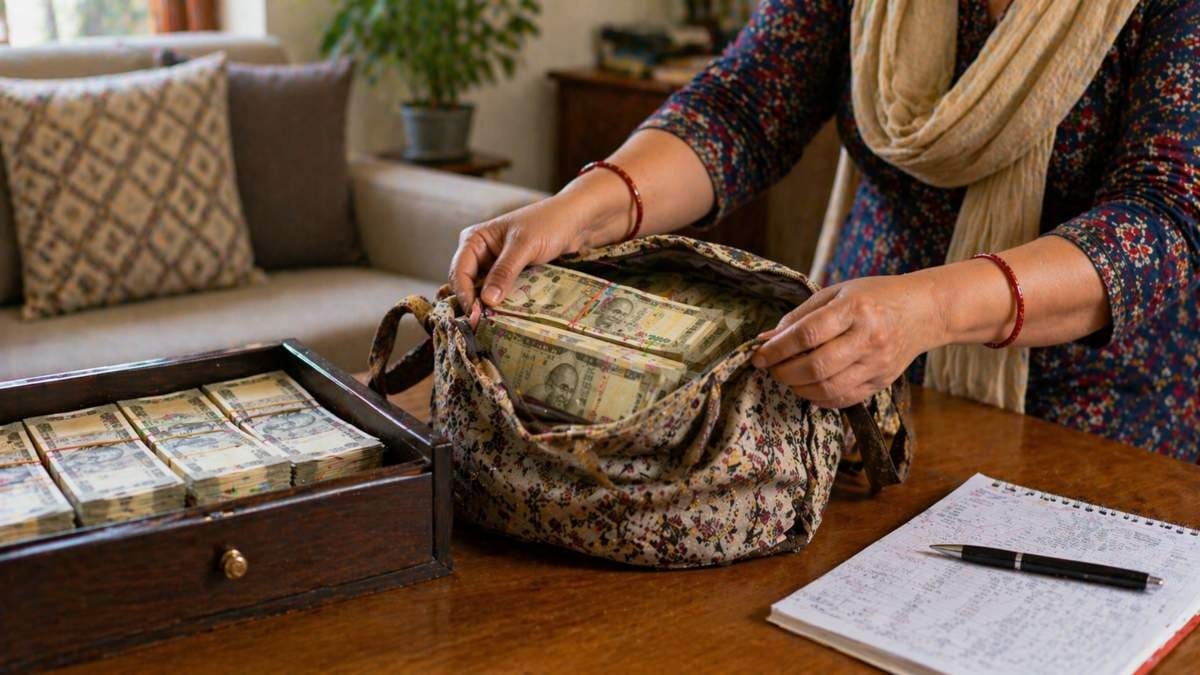 Kept cash at home, deposited later — tax dept flags it, ITAT steps in (AI-generated image)
In a ruling that will resonate with thousands of taxpayers who deposited cash during the 2016 note ban, the Income Tax Appellate Tribunal (ITAT) has made it clear that tax additions cannot be made merely on assumptions about how a “reasonable person” should behave.
The case, ITO vs Smt. Purnima Das, dealt with a common situation that surfaced across the country during Demonetisation in India 2016—cash deposits made in bank accounts and later questioned by the tax department.
What triggered the tax dispute
The timeline of events is fairly straightforward:
-Pre-2016: The taxpayer had withdrawn Rs 15 lakh cash from her bank account over a period of time
-November–December 2016 (demonetisation window): The same cash was deposited back into the bank
-Assessment stage: The tax officer flagged the deposits as unexplained income
The core issue was simple – was this old cash being redeposited, or new undisclosed income?
Taxpayer’s explanation: “This was my own money”.
The assessee maintained that the cash deposited during demonetisation was not fresh income and it was earlier withdrawals that had been kept at home. Bank records clearly showed withdrawals preceding the deposits.
In essence, the argument was: “There is a clear source—this is recycled money, not undisclosed income.”
Assessing officer’s objection: “No prudent person does this”. The AO, however, rejected this explanation using what is often called the “human probability” test.
The reasoning was that a reasonable person would not keep large cash idle for long periods. Instead, they would invest it, spend it or at least earn interest. Based on this logic, the AO concluded that the explanation was not believable and treated the deposits as unexplained income.
What ITAT said: Evidence matters, not assumptions
The ITAT disagreed with the tax officer and ruled in favour of the taxpayer.
The tribunal’s reasoning was clear and practical:
It said bank withdrawals were documented and there was no evidence that the cash had been used elsewhere. It also said that the AO relied only on assumptions about behaviour, not on proof.
The tribunal emphasised a key legal principle: An explanation cannot be rejected merely because it appears improbable—there must be evidence to disprove it.
In other words, just because something seems unusual does not make it taxable.
Why this ruling is important
This decision is significant because it addresses a very common pattern seen after demonetisation:
-Many taxpayers had cash in hand from earlier withdrawals
-Deposits during the note ban triggered automatic scrutiny
-Tax officers often used “no one behaves like this” arguments
The ITAT has now made it clear that taxation cannot be based on perception or personal notions of financial behavior.
Practical takeaway for taxpayers
The ruling offers a simple but powerful lesson:
-Keep clear records of withdrawals
-Maintain basic cash flow explanation
-Ensure consistency between bank statements and financial disclosures.
If the source is traceable, the burden shifts to the department to prove otherwise.
The bigger message is that at a broader level, the ruling reinforces a foundational tax principle:
Suspicion, however strong, cannot replace evidence
For readers, this translates into a reassuring takeaway: Depositing your own cash is not a problem—unless the tax department can prove it came from an undisclosed source.
It is important to note that this is a ruling of the Income Tax Appellate Tribunal (ITAT). ITAT decisions can be challenged before the High Court and, thereafter, the Supreme Court. Therefore, legal positions may evolve depending on further appeals.
Disclaimer:
This article is for informational purposes only and does not constitute professional tax advice. Tax laws and regimes are subject to frequent changes by the government. Readers should verify details with official Income Tax Department notifications or consult a Chartered Accountant before making any financial decisions.

