Mumbai: HDFC Bank, India’s second-largest by both deposits and assets, is bringing critical digital banking and payment platforms in-house after repeated cyberattacks on fintech companies, NBFCs, and vulnerable application programming interfaces exposed third-party outsourcing risks in the financing industry.“We are bringing our card platforms, including MyCards and OnlyCards, in-house. We are also in the process of insourcing PayZapp,” Ramesh Lakshminarayanan, group head of information technology and chief information officer at HDFC Bank, told ET. “Several third-party applications are being brought in-house.”
The country’s most-valued lender, told ET. “Several third-party applications are being brought in-house.”
HDFC Bank aims to eventually develop and maintain 70% of its key applications in-house, particularly mobile banking, net banking and payments platforms.
The bank, which had previously faced regulatory curbs over technology gaps in some customer deliverables, has also shut down BizX, a third-party platform serving small proprietorships, and integrated its functionality into existing systems.
Building Own Tech Capabilities
It is also strengthening API authentication, certificate management and monitoring of third-party connections to mitigate cybersecurity risks arising from vulnerabilities across the wider banking ecosystem.
“Our strategy is to eventually develop and maintain 60-70% of our key applications in-house in the next few years,” Lakshminarayanan said. “Critical platforms such as mobile banking, net banking and core payments, API management need to be under our control. These are the crown jewels, and having our own technology capabilities is essential to securing them and remaining competitive.”
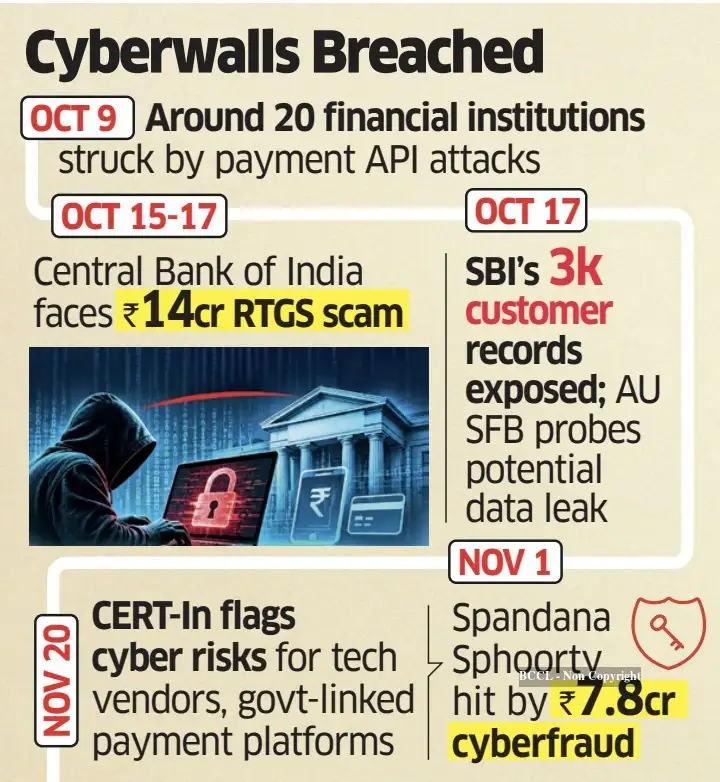
Third-party risks have consumed boardroom mind space across the financial industry following a spate of cyberattacks in the past three months, with NBFCs losing more than Rs 300 crore and more than 150 cyberfraud complaints being lodged across the country.
Risk Management
In October alone, around 20 financial institutions were affected by attacks involving stolen partner-bank credentials and vulnerabilities in payment and disbursement APIs, ET had reported. The Indian Computer Emergency Response Team (CERT-In) has since issued multiple advisories, warning of cybercriminals exploiting weaknesses in fintech platforms, payment gateways and third-party technology integrations to initiate unauthorised fund transfers.
In its latest advisory on November 20, the agency said such attacks had spread beyond financial institutions to technology service providers handling government-linked payments and platforms processing vendor and business-partner payouts.
Lakshminarayanan said conventional third-party risk management, which relies heavily on periodic audits and security certifications, is becoming inadequate as cyberattacks grow more sophisticated.

