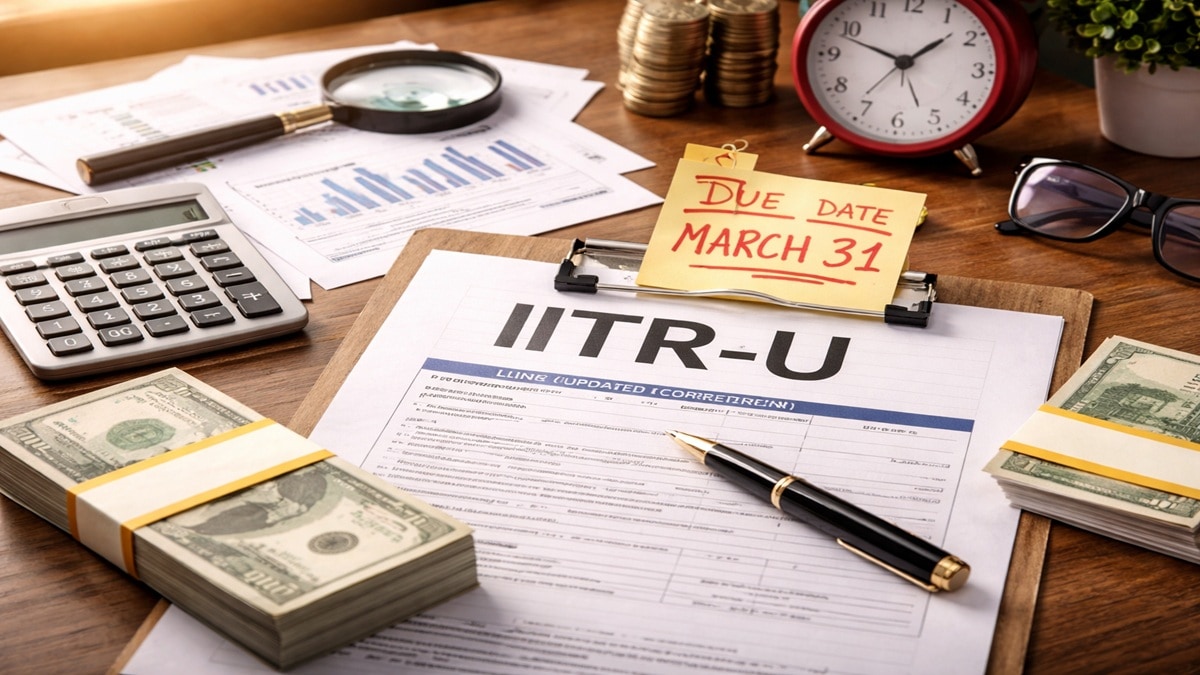
Have you missed reporting income or made mistakes in your Income Tax Return (ITR)? There is still a window to correct it. Taxpayers can use the Updated Income Tax Return (ITR-U) to fix errors or disclose missed income. With March 31 approaching, individuals must act quickly to avoid higher penalties and legal trouble.
For FY 2024–25 (AY 2025–26), ITR-U becomes especially relevant as the tax system now allows more flexibility to correct past mistakes.
What is ITR-U?
Updated Income Tax Return, or ITR-U, is a facility under Section 139(8A) of the Income Tax Act that allows taxpayers to correct errors in filed returns, report missed income, and update previously filed ITR.
It can be filed even if you missed the original return deadline, the belated return deadline or did not revise your return. In simple terms, ITR-U is a second chance to come clean on taxes.
Timeline: How ITR filing works
Understanding the timeline helps explain where ITR-U fits:
Step-by-step filing cycle:
Original ITR – Usually filed by July 31
Belated / Revised ITR – Allowed till December 31
Missed both? Here comes into play ITR-U after all previous deadlines get over. This makes ITR-U the last opportunity to correct tax filings.
Deadline for ITR-U (FY 2024–25)
ITR-U can be filed for 4 years (48 months) from end of assessment year. For AY 2025–26, the deadline is March 31, 2030. However, March 31 each year is important, as additional tax liability increases with delay.
Budget 2026 update: What has changed
The government has introduced key changes in Budget 2026 to make compliance easier:
- Filing allowed during reassessment – Taxpayers can now file ITR-U even after reassessment begins, but must pay additional 10% tax (over existing penalties).
- Loss adjustment allowed (from March 1, 2026) – Earlier, it was not allowed but now taxpayers can reduce losses using ITR-U.
The objective is to reduce litigation and encourage voluntary compliance.
Who can file ITR-U?
You can file ITR-U if you missed filing ITR completely, under-reported income, chose the wrong income head, paid tax at the wrong rate or want to reduce carried forward losses or depreciation.
It applies to original return, belated return, revised return. But remember, only one updated return per assessment year is allowed.
Who cannot file ITR-U?
You cannot use ITR-U if you want to claim or increase a refund and lower tax liability. Also, if you are filing a nil or loss return (with exceptions post Budget 2026), you cannot file ITR-U. If there’s is a search or survey proceedings initiated, ITR-U cannot be filed. If you already filed an updated return for that year, then also you cannot file an ITR-U. The key rule is that ITR-U is only for paying extra tax, not reducing it.
Additional tax: What you need to pay
Filing ITR-U comes with an extra cost:
Within 12 months → 25% additional tax
After 12 months → 50% additional tax
Budget 2026 cases (reassessment) → extra 10% more
Total cost = Tax + Interest + Additional tax
How to file ITR-U
Filing is done online via the income tax portal:
-Log in to income tax e-filing portal
-Select ‘Updated Return (ITR-U)’
-Choose assessment year (AY 2025–26)
-Provide reason for updating return
-Report additional income and tax
-Pay tax and submit
Why acting early matters
While the deadline extends till 2030, delaying can be costly as it will result in higher additional tax, increased scrutiny and possible notices. So, remember that filing early means lower penalty and peace of mind.
Summing up…
ITR-U is designed to give taxpayers a final opportunity to correct mistakes. With new rules introduced in Budget 2026 and extended timelines, the system is becoming more flexible — but also stricter on compliance. If you have missed reporting income, this is your chance to fix it before it becomes a bigger problem.
Disclaimer: This article is for informational purposes only and does not constitute professional tax advice. Tax laws and regimes are subject to frequent changes by the government. Readers should verify details with official Income Tax Department notifications or consult a Chartered Accountant before making any financial decisions.
 aniltikotekar4sme.com