Amid growing concerns over income tax refund delays, scammers are targeting anxious taxpayers with fake “pending refund” messages. After one taxpayer lost ₹1.5 lakh, the Income Tax Department has issued a warning urging people not to click on suspicious links or share OTPs and login details.
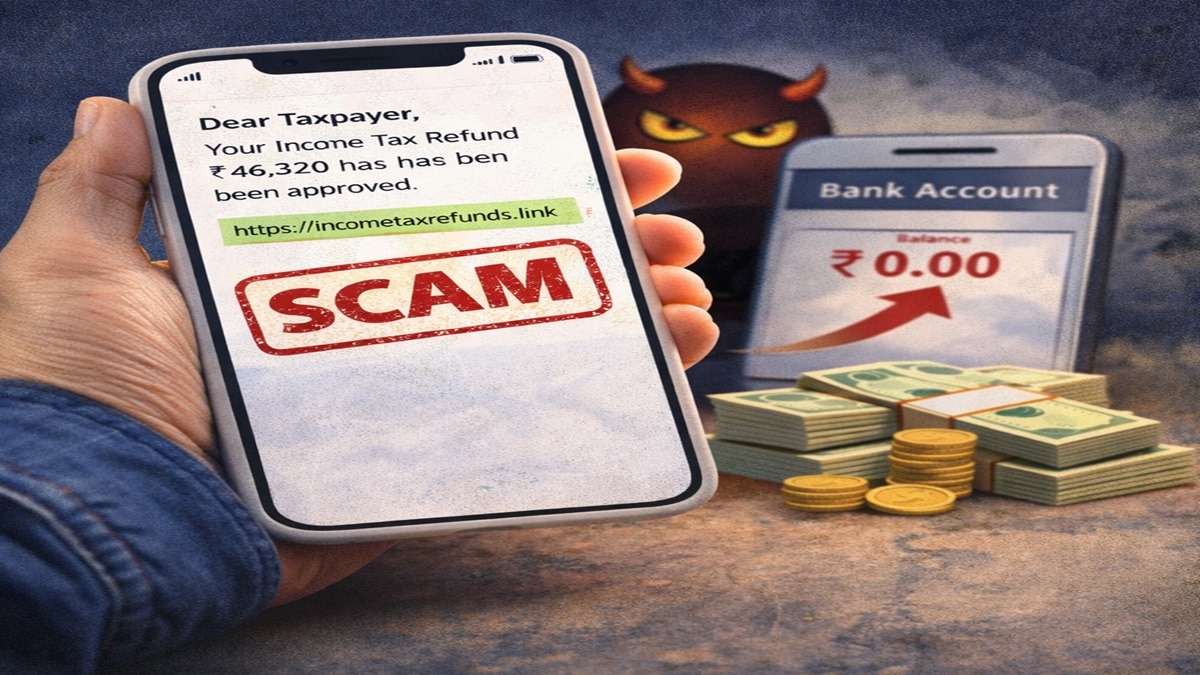 Income Tax Refund scam alert: Fake refund message costs taxpayer Rs 1.5 lakh — Here’s how you can stay safe (AI-generated illustration for representational purposes)
A taxpayer recently lost Rs 1.5 lakh after responding to a fake “refund delay” message, triggering a fresh warning from the Income Tax Department.
The alert comes at a time when many taxpayers have already been anxious about refund delays over the past year — a concern that fraudsters are now exploiting through phishing messages and fake portals.
Over the last one year, refund timelines have been a talking point among taxpayers. Many individuals took to social media complaining about delays in receiving refunds despite early filing.
In response, the government maintained that refunds are processed after due verification and matching of data, especially where discrepancies are flagged.
Officials have repeatedly said that while most refunds are issued within weeks, cases involving mismatches, scrutiny or pending verification can take longer.
It is this anxiety around “delayed refunds” that scammers are now exploiting.
How the scam is playing out
According to a social media post by tax advisory platform TaxBuddy on ‘X’, the fraud typically begins with a message claiming that your refund is pending and needs urgent verification. The message carries a link that appears official.
Once clicked:
You are redirected to a fake website resembling the Income Tax portal
You are asked to enter PAN, login ID and password
An OTP is requested in the name of verification
In some cases, bank details are also sought
The moment these details are shared, the fraudsters gain access to your account. In the recent case highlighted, the taxpayer lost Rs 1.5 lakh.
Why taxpayers are falling for it
Refund-related communication always attracts attention. When a message says “refund delay” or warns that the amount may lapse, it creates urgency. Fraudsters deliberately use:
-Fear-based language
-Final reminder tone
-Threats of refund cancellation
-Immediate action prompts
The pattern is simple — panic leads to quick clicks, and quick clicks lead to compromise.
What the Income Tax Department does NOT do
The Income Tax Department has clarified:
It does not send refund verification links via SMS
It does not ask for OTPs over phone calls or messages
It does not request passwords or banking details through random emails
Refund status can only be checked by logging directly into the official Income Tax e-Filing portal. Taxpayers are advised to type the website address themselves instead of clicking on any embedded links.
What you should do
If you are expecting a refund:
Log in directly to the official portal to check status
Ignore messages asking for urgent verification
Never share OTP, password or login credentials
Report suspicious messages immediately
You can report phishing attempts to the department’s official grievance channels and also to the Indian Computer Emergency Response Team (CERT-In) to help prevent further fraud.
Summing up…
Refund delays may happen due to verification processes — but urgent SMS links asking for OTPs are not part of the official process.
If a message pressures you to act immediately and share confidential details, treat it as a red flag. In refund season, caution is your strongest protection.
 aniltikotekar4sme.com