“In section 8 of the Right to Information Act, 2005, in sub-section (1), for clause (j), the following clause shall be substituted, namely:— “(j) information which relates to personal information,” reads the draft Bill tabled in Parliament.
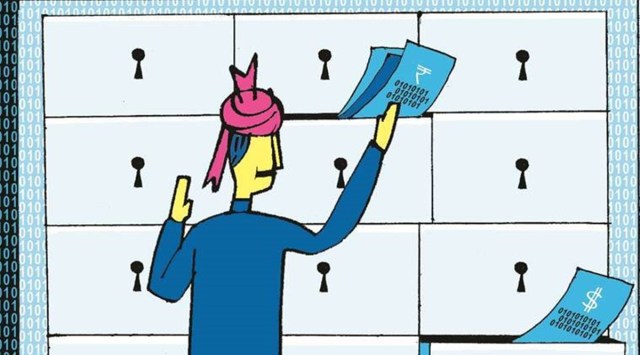 The Bill proposes amending Section 8(1)(j) of the Right to Information Act, 2005.
Among the chorus of Opposition MPs’ protest against the introduction of the data protection Bill in Parliament, one point resonated rather clearly – that the Digital Personal Data Protection Bill, 2023 could weaken the Right to Information Act, 2005. The reason for the caution is a single line in the Bill, that is rather easy to miss as a footnote.
The Bill proposes amending Section 8(1)(j) of the Right to Information Act, 2005. Currently, this particular section prevents a public authority from sharing anyone’s personal information on two main grounds – that the disclosure will have no bearing on any public activity, and that revealing such information would cause unwarranted invasion of the privacy of an individual, unless such disclosure is justified in larger public interest.
However, the Bill tabled in Parliament proposes that the personal information of public officials will not be disclosed under the RTI Act. The two key grounds, that such information could be disclosed provided it serves a larger public interest has been recommended to do away with.
“In section 8 of the Right to Information Act, 2005, in sub-section (1), for clause (j), the following clause shall be substituted, namely:— “(j) information which relates to personal information,” reads the draft Bill tabled in Parliament.
The measure was initially proposed in the first version of the Bill which was released in November last year.
In Parliament on Thursday, Congress MP Adhir Ranjan Chowdhury said that the Bill was a “sinister move” to “trample” the Right to Information Act, 2005. He added that the change will introduce an “era of corruption” because personal data like assets and liabilities, and educational qualification of “corrupt government functionaries.
The same concern has previously been flagged by civil society activists as well. In December last year, a group of retired judges, and bureaucrats had written a letter to all Parliamentarians regarding the change in the RTI Act.
“Through this amendment, all personal information can be denied, even if disclosure of that information is relevant to the larger part of public activity or in public interest as provided for in Section 8 of the RTI Act,” the letter said.
“This gives legal sanction for government entities, government functionaries and political executives to remain opaque in their functioning. This will also result in regression of legal victories consolidated thus far that have ensured the declaration of information in the public domain in the public interest of entities enjoying power and privilege,” this added.
ALSO READ | Digital Personal Data Protection Bill 2023, a much-needed legislation, says India Inc
The Centre, however, said that privacy is a fundamental right, even for those in public life. In an interaction with The Indian Express, Minister of State for Electronics and IT Rajeev Chandrasekhar said, “The RTI Act does not mean the right to personal information. All the Bill says is that the RTI Act can continue to ensure transparency and accountability for those in public life, but the right to privacy is certainly not foregone simply because someone is in public life”.
Asked about government functionaries potentially managing to evade disclosures due to Bill, once it becomes law, Chandrasekhar said, “But then what is the whole point of privacy as a fundamental right? It can not be that we start formulating policy and law based on extreme scenarios of maleficence”.
 aniltikotekar4sme.com